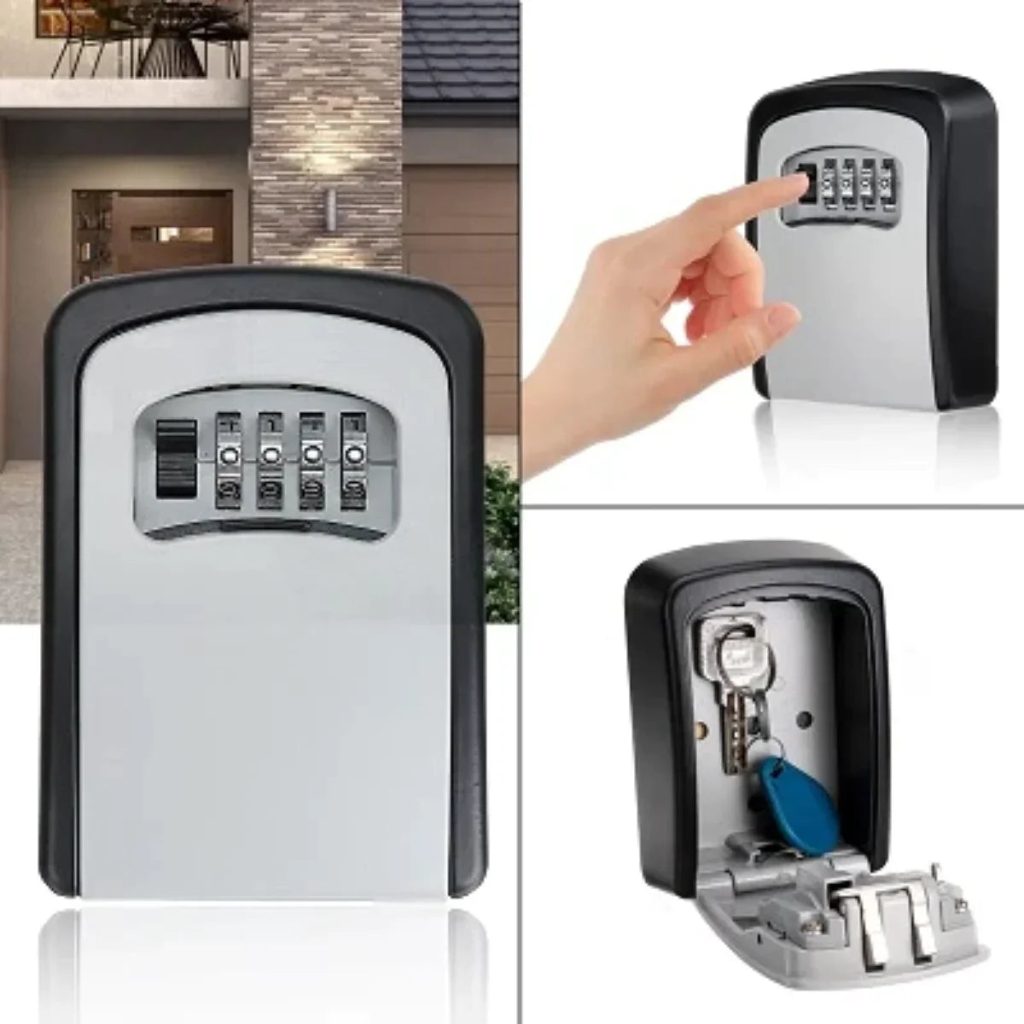
Key points in brief:
- Choose the safe size based on the value of items you store and the space where you install it.
- Key locks are reliable, electronic ones are practical. Choose based on your habits and security needs.
- Fire resistance (class 0 or 1) protects papers and documents, but not electronic devices for long.
- Always install the safe into a concrete wall or floor, in a place that is not obvious (e.g., a closet, under the stairs).
- A combination of lock and fire resistance gives the best protection for the home. Do not skimp on the lock.
A home safe is not a luxury, but a smart investment in peace of mind and security. Whether you store cash, jewelry, important papers, or a USB with a backup, choosing the right safe depends on several concrete factors. In this guide, we go through the key points: size, lock type, fire resistance, and where to install it best. The goal is to go shopping prepared, without marketing fluff.
1. Safe size: do not get one too small or too large
The first question: what exactly do you want to store? If it is only documents and some jewelry, a safe with a capacity of 5-10 liters is enough. For larger amounts of cash, weapons, or several valuable items, look at models from 20 liters upward. It is important that the safe fits in the place where you plan to install it. Measure the niche or the space in the closet before buying. Tip: get one size larger than you think you need. Things pile up easily.
2. Lock type: key, code, or biometrics?
The most common choices are a key lock (mechanical) and an electronic lock (code or fingerprint). The mechanical one is simple, does not use batteries, and is reliable for decades. The electronic one is practical: you do not carry a key, but it requires battery replacement and can fail in extreme cold. Recommendation: for the home, choose a key lock with a security cylinder (at least 3 keys, with drill protection). If you like technology, get a combination: a mechanical lock as the base and an electronic panel as an addition. At Smart Home Shop, you can find models with both options.
3. Fire resistance: does it protect your items from fire?
Fire resistance is marked with classes (0, 1, 2) and time (30, 60, 120 minutes). For the home, class 0 or 1 is enough. It protects papers and documents for up to 30-60 minutes at temperatures up to 900°C. Important: fire resistance does not protect electronic devices (laptop, external drive) from high temperature. They get damaged already at 50-70°C. If you store digital data, consider a fire-resistant media box or regular cloud backup. Do not trust cheap safes that claim to be fire-resistant. Check the certificate (e.g., EN 1047-1).
4. Where to install the safe: location is half the job
The safe should be fixed with anchors to a concrete wall, floor, or ceiling. A freestanding safe is easy to carry out. The best places: in the wall behind a wardrobe, under the stairs, in the floor under a carpet, or in a masonry wall in the pantry. Avoid the bedroom (an obvious place) and places near windows or doors. Practical tip: install the safe so that its door opens toward the inside of the room. This makes it harder to pry open. If you do not have a wall for installation, a heavy safe (over 50 kg) with floor anchoring is the next best option.
5. Additional criteria: weight, material, and price
The weight of the safe is an indicator of security. The heavier it is, the harder it is to carry out. Steel walls 2-4 mm thick are the minimum, and a concrete filling increases the mass. Do not chase the cheapest option. A safe for 50 euros will not stop a burglar with a crowbar. For the home, a realistic budget is 150-400 euros for a quality model with a lock and fire resistance. At Smart Home Shop, we have models in that range with detailed specifications. Prices are on the product page.
6. How to test the safe before buying?
If you buy in a store, ask to open the safe and check the lock mechanism. It should work smoothly, without sticking. For electronic locks, check that the panel responds quickly and that there is a backup mechanical lock. Mandatory: read the warranty. Good safes have a 2-5 year warranty on the lock and fire resistance. Online shopping is fine, but choose trusted brands (e.g., Gardesa, Yale, or models with a certificate).
See in the offer
Frequently asked questions
What is the minimum size of a home safe?
For documents and jewelry, 5-10 liters is enough. For larger items or cash, choose 20+ liters.
Is an electronic lock safer than a mechanical one?
Not necessarily. A mechanical lock with a quality cylinder is more reliable in the long run, while an electronic one offers convenience. A combination of both is ideal.
How much does a good home safe cost?
A quality model with a lock and fire resistance costs 150-400 euros. Cheaper safes often do not have adequate protection.
Can a safe protect against fire?
Yes, if it has a fire-resistant certificate (class 0 or 1). It protects papers for up to 30-60 minutes, but not electronic devices.
Where is the best place to install a safe in a house?
In a concrete wall in the pantry, under the stairs, or in the floor. Avoid the bedroom and places near doors.
Can I install the safe myself?
Yes, if you have the appropriate tools (concrete drill, anchors). Professional installation is recommended for safety.