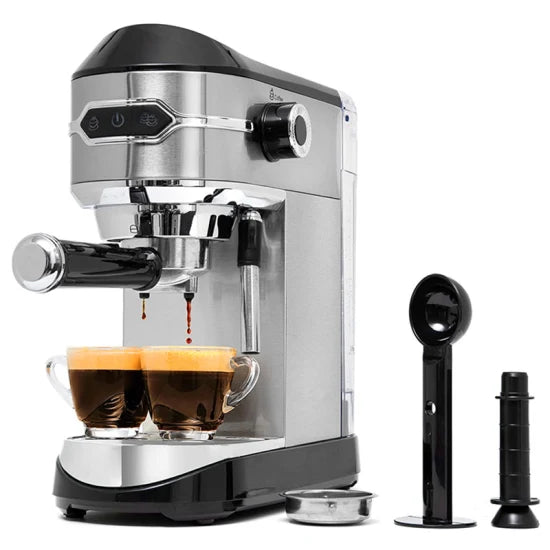
Key takeaways:
- 9 bar pressure is optimal for espresso, and a higher bar number does not mean a better result.
- A built-in grinder is key for freshness and flavor, and ceramic or steel burrs are more durable.
- Regular maintenance, including cleaning and descaling, extends the life of the machine and preserves flavor.
- Cheap machines often have weaker temperature and pressure control, which affects the quality of the drink.
- A good espresso machine does not have to be expensive, but it must have a reliable pump and adjustability.
When you are thinking about buying an espresso machine for home use, it is easy to get stuck in a sea of technical specifications and marketing promises. There is a huge price range on the market, from cheap models to professional machines, and the difference in results is often not obvious at first glance. In this guide, through the lens of experience and practical advice, we will explain what you really need to look for when choosing an espresso machine, focusing on pressure, grinder, and maintenance.
Our mission at Smart Home Shop is to help you make an informed decision without unnecessary complication. That is why we will break down the key differences between cheap and good machines, so you know what to pay attention to and what to avoid.
Pressure in bars: why 9 bars, not 15 or 20?
One of the most common marketing tricks is highlighting high pressure, such as 15 or 20 bars, as a guarantee of quality. However, the truth is that espresso is traditionally extracted at around 9 bars of pressure. Higher pressure does not mean better taste, on the contrary, it can lead to a bitter and over-extracted drink.
- Optimal pressure: Look for a machine that has a pump that can maintain a stable 9 bars during extraction.
- What does a higher number mean? In cheap machines, the declared pressure is often the maximum, not the working pressure, which means that in practice you will not have stable pressure.
- How to check? Pay attention to user reviews and tests that measure actual pressure during operation.
A good espresso machine will have precise pressure control, either through a mechanical valve or an electronically controlled pump. This is one of the key differences between a cheap and a good model.
Grinder: freshness is half the job
No matter how good the machine is, if you use pre-ground coffee, you will not get the full flavor. Freshly ground beans are essential for a rich crema and aroma. That is why a built-in grinder or the ability to use a quality standalone grinder is of great importance.
- Built-in grinder: Many machines in the mid-price range have built-in grinders, which is practical and saves space.
- Burr material: Ceramic or steel burrs are more durable and provide more consistent grinding compared to plastic ones.
- Grind size adjustment: The ability to fine-tune is crucial because different coffees require different grind sizes.
If you are choosing between a machine with and without a grinder, keep in mind that a quality standalone grinder may give you better results, but it will also take up more space. At Smart Home Shop, we often recommend models with a built-in grinder for beginners because they are easier to use.
Maintenance: what awaits you after purchase?
Many people neglect maintenance, which is a big mistake. An espresso machine requires regular cleaning and descaling, otherwise the flavor will deteriorate, and the machine may break down. The difference between a cheap and a good machine is often seen in the ease of maintenance.
- Removable parts: Check that the drip tray, water tank, and group head are easily accessible and washable.
- Automatic cleaning: Some models have rinse and descaling programs, which makes maintenance easier.
- Indicators: Light or sound signals that remind you when it is time to descale are a useful feature.
Regular maintenance is not complicated, but it requires discipline. If you are not ready for that, consider a machine with self-cleaning features or a simpler model.
Cheap vs. good: where are the real differences?
When you compare a cheap espresso machine (under 100 EUR) with a good model (over 300 EUR), the differences are noticeable in several key areas.
- Temperature control: Cheap machines often have uncontrolled temperature fluctuations, which leads to inconsistent flavor.
- Pump: Cheaper models use vibratory pumps that are less reliable, while more expensive ones have rotary pumps for more stable pressure.
- Materials: Plastic vs. metal, metal parts are more durable and retain heat better.
- Adjustability: Good machines allow you to adjust temperature, pressure, and water volume, while cheap ones are fixed.
Of course, there are exceptions, but in general, the more you pay, the better control and longer lifespan you get. Our advice is to invest in a quality machine that will serve you for years.
How to test a machine before buying?
If you have the opportunity, test the machine before buying. Many stores, including Smart Home Shop, offer demonstrations. Pay attention to the following:
- Heating time: A good machine heats up in 20-30 seconds, while cheaper ones may take longer.
- Noise: The pump should not be too loud, this may indicate poor quality.
- Crema: Prepare an espresso and look at the color of the crema, it should be hazelnut-brown, thick, and persistent.
- Taste: If possible, taste the drink, a bitter taste indicates over-extraction, and a sour taste indicates under-extraction.
Testing gives you a real picture of how the machine works in practice, not just on paper.
Recommendations for beginners and advanced users
For those who are just starting out, we recommend a machine with a built-in grinder and automatic programs, this simplifies the process and reduces errors. For advanced users, semi-automatic models with manual pressure and temperature control provide more room for experimentation.
Regardless of experience level, it is crucial that the espresso machine is reliable and suits you. In our offer at Smart Home Shop, we have models for all budgets, and our team can help you choose the right one.
Check out the offer
Frequently Asked Questions
Does higher pressure in bars mean better espresso?
No, the optimal pressure for espresso is 9 bars. Higher pressure can lead to a bitter taste and over-extraction.
Is a built-in grinder necessary?
It is not necessary, but it is practical. Freshly ground coffee is key to flavor, so if you do not have a built-in grinder, invest in a quality standalone one.
How often should I descale the machine?
It depends on water hardness, but the recommendation is every 1-3 months. Many machines have an indicator that reminds you.
What is the difference between a cheap and an expensive machine?
The main differences are in temperature control, pressure stability, material quality, and adjustability. More expensive machines provide a more consistent result.
Can I make good espresso with a cheap machine?
It is possible, but harder. With proper grinding and technique, you can get a decent drink, but you will have less control and more errors.
What is most important when buying an espresso machine?
The most important thing is that the machine has stable 9 bar pressure, a good grinder (or the ability to use a quality one), and is easy to maintain.