Key Takeaways:
- The anti-fog feature heats the mirror surface to prevent moisture from condensing.
- Power consumption is low, but the exact figure depends on the heater’s wattage.
- Installation is straightforward, but the electrical hookup should be done by a pro.
- Budget-friendly alternatives like anti-fog sprays and films are available.
- Whether it’s worth it depends on how often you use the bathroom and how well it’s ventilated.
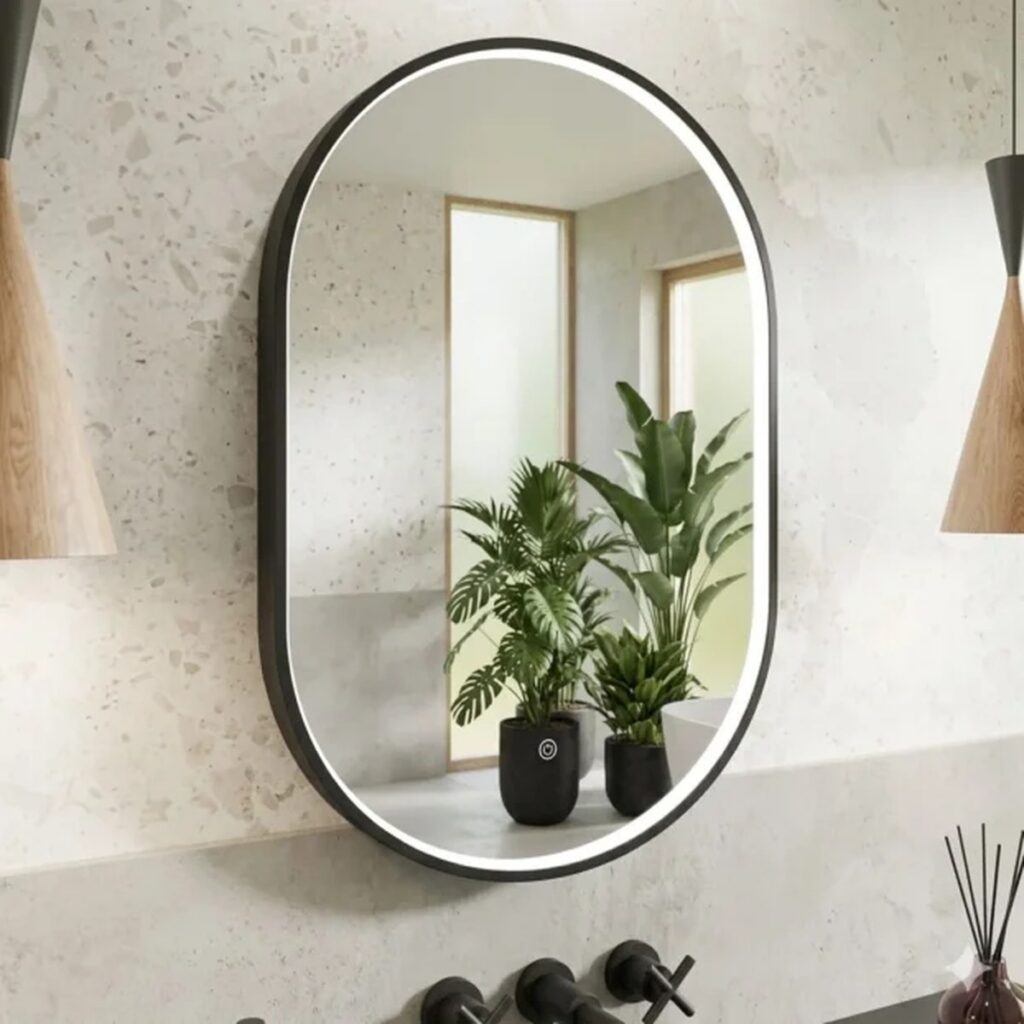
LED mirrors with anti-fog technology are becoming a go-to choice for modern bathrooms. A heating element behind the glass warms the surface, so it won’t fog up after a hot shower. This guide breaks down how the system works, what it costs to run, and what to consider before you install one.
We’re keeping it practical and straightforward—no fluff. If you’re thinking about buying one, here’s what you need to know.
How the Anti-Fog Heater Works
The anti-fog system uses an electric heating pad that’s bonded or attached to the back of the mirror. When you switch it on, the heater raises the glass temperature a few degrees above the room’s air temperature, which stops condensation from forming on the surface.
You’ll typically control the heater with a wall switch, or it can be wired to turn on with the bathroom light. Some models come with a timer that shuts the heat off after 15–20 minutes, while others stay on until you manually turn them off.
One thing to keep in mind: the heater warms the glass—it doesn’t dehumidify the room. Proper ventilation is still a must in any bathroom.
How Much Power Does an LED Anti-Fog Mirror Use?
Power draw depends on the heater’s wattage, which usually ranges from 50 to 150 watts. Higher wattage means faster heating, but it also means more electricity. Check the product page for the exact specs on any model you’re considering.
Here’s a quick example: a 100W heater running for 20 minutes uses about 0.033 kWh. If you use it daily, that adds up to roughly 1 to 1.5 kWh per month. For context, a standard 60W bulb left on for 3 hours a day consumes around 5.4 kWh monthly.
Since LED lighting draws far less than traditional bulbs, the mirror’s overall energy footprint stays pretty modest.
Installing It in Your Bathroom: What to Know
Mounting an LED anti-fog mirror isn’t complicated, but it does require some care. You’ll secure it to the wall with anchors and screws, and the electrical connection needs to meet local codes.
- Make sure there’s a grounded electrical outlet or junction box at the installation spot.
- Mount it at a comfortable height—usually 150–170 cm from the floor.
- Keep the mirror away from direct water contact. In Zone 2 (within 60 cm of a tub or shower), you’ll need at least IP44 protection; if there’s a chance of direct spray, go for IPX5. The bathroom circuit should also be protected by a residual current device (RCD or GFCI).
- If you’re not comfortable with electrical work, hire a licensed electrician.
Before you buy, measure the wall space above your vanity. The mirror should be wide enough to cover the area without blocking cabinet doors or fixtures.
Is Anti-Fog Worth It Compared to Alternatives?
Anti-fog sprays are the cheapest route. You apply them to the glass and they last a few days, but they need regular reapplication. Heated films you can stick onto an existing mirror are a middle-ground option, though they’re often less effective than a built-in system.
An LED mirror with anti-fog is the most convenient pick if you use your bathroom daily and don’t want to deal with upkeep. Over time, the convenience and time saved can easily justify the upfront cost.
That said, if your bathroom is well-ventilated and used infrequently, a standard mirror with the occasional wipe-down might be all you need. It really comes down to your routine.
How to Choose the Right Model at Smart Home Shop
At Smart Home Shop, you’ll find a range of LED mirrors with anti-fog built in. When you’re comparing options, keep these features in mind:
- Mirror size that fits your bathroom layout.
- Heater wattage and how you control it (switch, timer, remote).
- LED light quality and color temperature.
- Extras like dimming or motion sensors.
We’d suggest browsing the mirror category on our site to compare specs side by side. If you’re unsure which one fits your needs, our support team is happy to help.
Browse Our Range
Frequently Asked Questions
Does the anti-fog mirror work without a light switch?
Yes, the heater runs on its own electrical connection. It can have a dedicated switch, timer, or sensor, completely independent of the light circuit.
How long does it take for the fog to clear?
The glass usually warms up within 2–5 minutes, depending on the heater’s wattage and the room temperature.
Can it be installed in any bathroom?
As long as there’s an electrical supply and enough wall space, yes. Older bathrooms might need some additional wiring to get there.
What’s the difference between an anti-fog spray and a built-in heater?
Spray is cheaper and easy to apply, but it wears off and needs frequent touch-ups. A built-in heater works automatically with zero maintenance, though it costs more upfront.