Key Takeaways:
- Air coolers lower the temperature through water evaporation and work best in dry, warm spaces.
- Portable air conditioners cool the air via a refrigeration circuit but require an exhaust hose for hot air.
- Dual-hose portable ACs solve the negative pressure issue that single-hose units create.
- For a bedroom, noise and condensate management often matter more than raw cooling power.
- Before buying, measure your room and check the cooling capacity (kW or BTU) on the product page.
When summer heat becomes unbearable, many people reach for a portable mini AC or an air cooler. Both promise relief, but they work on completely different principles. One cools the air with a refrigeration circuit, the other humidifies and circulates it. The difference in price, energy use, and effectiveness is significant, so it’s important to know what you’re buying before you decide.
In this article, we separate real cooling from mere air chilling. We show where each device excels, where it struggles, and how to avoid disappointment. If you need a quick answer: a portable mini AC is for enclosed spaces where you want a concrete temperature drop, while an air cooler is for dry, well-ventilated areas where airflow is the main effect.
How They Work—and How They Can Mislead You
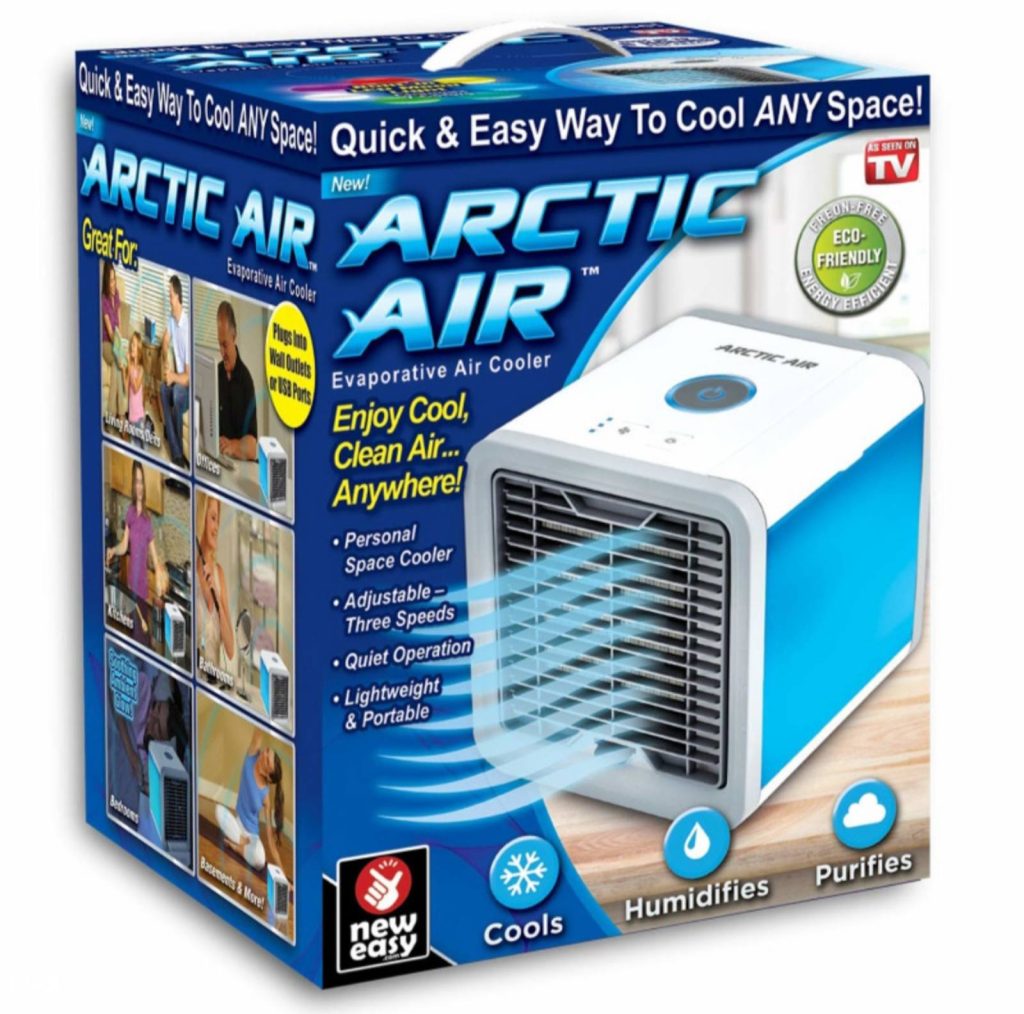
An air cooler (also called an evaporative cooler) pulls air through a damp filter. As water evaporates, it absorbs heat, making the outgoing air feel fresher. The effect is pleasant, but it’s not true cooling. When humidity is high, evaporation slows down, and the device barely changes the temperature.
A portable mini AC works like a small refrigerator. A compressor pressurizes refrigerant, heat is expelled through the condenser and hose, and the cooled refrigerant circulates through an evaporator coil that a fan blows air over. The result is a real temperature drop, but the hot air has to exit through the hose. If the hose isn’t set up properly, some of that heat seeps back into the room.
There are also dual-hose portable ACs that draw outside air to cool the condenser and exhaust heat through a second hose. These don’t create negative pressure in the room, so they’re more efficient. Single-hose units are more common and cheaper, but they pull warm air in from gaps and cracks.
Energy Consumption and Your Bill
An air cooler uses between 50 and 150 W, depending on the model. That’s about the same as a bright light bulb or a small fan. A portable AC draws 800 to 1500 W, which is several times more. The difference on your electricity bill can be noticeable if the AC runs all day.
But hourly wattage isn’t the only factor. If you run the AC only during the hottest hours and turn it off at night, consumption stays moderate. An air cooler running non-stop could end up costing about the same as an AC that runs a third of the time. So it’s smart to estimate how many hours a day you’ll actually use the device.
For current numbers on each model, check the product page at Smart Home Shop. That’s where you’ll find the rated power and energy class, so you can compare before you buy.
Where an Air Cooler Works—and Where It Doesn’t
An air cooler shines in dry, warm spaces like patios, balconies, garages, or workshops. There, the air isn’t saturated with moisture, so evaporation delivers a refreshing feel. It’s also great for boosting airflow near an open window.
In a closed room with high humidity, the effect is weak. If the air is already humid, an air cooler can just add more moisture and make the space feel even stuffier. For a bedroom with the windows shut, it’s not the right choice.
A tower fan is a cheaper alternative that gives you the same airflow effect without the added humidity. If you just need a breeze, not cooling, a fan is the simpler solution.
When a Portable AC Makes Sense
A portable mini AC is for rooms where you can’t install a split system—like a rental apartment, an office without permission for modifications, or a room where you don’t want to drill into the wall. It delivers a predictable temperature drop, usually by a few degrees, as long as it’s properly sized.
The key spec is cooling capacity, measured in kW or BTU. For a room up to 20 square meters, around 2.5 kW is usually enough, but the exact ratio depends on insulation, window count, and sun exposure. Don’t rely on rules of thumb—check the manufacturer’s recommendation on the label.
Dual-hose models cost more but perform better. If you’re on a tight budget, a single-hose AC can still work, but expect it to pull warm air from hallways or through the window. Window sealing kits can reduce that effect and often come bundled with the unit.
Noise, Condensate, and Maintenance
Noise is often overlooked, but it’s critical for a bedroom. An air cooler runs quietly, like a fan, at 30 to 50 dB. A portable AC has a compressor and can be louder, especially on higher settings. If sleep matters to you, check the noise rating on the spec sheet.
Condensate is the other practical concern. With a portable AC, moisture collects in a tank you have to empty, or it evaporates through the exhaust hose. If you don’t empty the tank in time, the unit shuts off. An air cooler doesn’t have that issue, but it does require regular filter cleaning and water refills.
Routine maintenance extends the life of your device. Filters need washing or replacing per the manual, and the water tank should be emptied after each use. These small habits are what separate a unit that lasts from one that causes headaches.
How to Choose Between Them
Start by asking yourself three questions. Where will the unit sit? How many hours a day will it run? Are you allowed to run a hose through a window or door?
If the space is enclosed and you want real cooling, a portable mini AC is the better pick. If the space is ventilated or open, an air cooler is sufficient and cheaper to run. For a bedroom, think about noise and condensate before you think about power.
At Smart Home Shop, you can compare models by capacity, noise level, and price. Read the specs on the product page and measure your room before you buy. If you need help, reach out to us, and we’ll find a solution together.
Browse Our Range
FAQ
What’s the difference between a portable AC and an air cooler?
A portable AC cools the air using a refrigeration circuit and exhausts heat through a hose. An air cooler evaporates water and only chills the air, without a real temperature drop.
Does an air cooler work in humid spaces?
Not effectively. When humidity is high, evaporation slows down, and the unit doesn’t deliver that fresh feeling. It’s best in dry, well-ventilated areas.
How much does it cost to run a portable AC?
It depends on wattage and your electricity rate. A portable AC uses more power than an air cooler, but if you run it for short periods, the bill difference can be small. Exact figures are on the product page.
What is a dual-hose portable AC?
It’s a model with two hoses—one for drawing in outside air and one for exhausting hot air. It doesn’t create negative pressure, so it’s more efficient than single-hose units.
How do I seal a window for a portable AC?
Use sealing strips or panels that fit into the window and hold the hose in place. They reduce warm air infiltration and improve cooling performance.
What happens to condensate in a portable AC?
Moisture collects in a tank you need to empty, or it evaporates through the hose. If the tank fills up, the unit shuts off until you drain it.