Key Takeaways:
- A tankless water heater under the sink makes sense when your home’s electrical setup can handle it and you need hot water instantly, without waiting.
- For a standard outlet with limited capacity, a small 5 to 15-liter tank water heater is the better option.
- A three-phase connection opens the door to more powerful tankless heaters that can even cover showering.
- Non-pressurized tankless heaters require a special faucet, while pressurized models connect directly to the water line.
- Tankless heaters are cost-effective for occasional use, not for constant hot water in the kitchen.
When you need hot water in the kitchen and don’t have a large water heater nearby, a tankless under-sink heater seems like the obvious fix. It heats water on demand, has no tank, and takes up minimal space. But before you buy one, you need to know whether your electrical system and water pressure can actually support it. This guide will help you decide if a tankless heater is the right fit for your sink or if a small tank model makes more sense.
How a Tankless Water Heater Works and What Determines Its Power
A tankless water heater has no reservoir. Water flows through the heating element and warms up only while the faucet is open. That’s why its wattage is critical: the higher the wattage, the more water it can heat per minute. For under-sink use, the most common models are 3.5 kW and 5.5 kW, though more powerful options exist.
The flow rate you’ll get depends on the wattage and the incoming water temperature. In winter, when the supply water is cold (around 8 to 10°C), the same heater produces less hot water than in summer. For example, a 3.5 kW model with cold winter inlet water delivers roughly 1.5 liters per minute at about 40°C—enough for light washing, but not for filling pots. Always check the exact flow rate on the product page.
Your Home’s Electrical Setup: The Biggest Limitation
Before purchasing, check what kind of wiring you have. A standard 230 V outlet with a 16 A breaker can handle a heater up to about 3.5 kW. A more powerful 5.5 kW model draws around 24 A, which means you’ll need a dedicated circuit with a 32 A breaker and appropriately sized cable (usually 4 to 6 mm², depending on how it’s run). If you don’t have that, call an electrician to assess your setup.
Many homes in Serbia have a three-phase connection. This is essential for tankless heaters in the 9 to 18 kW range, which can deliver much higher flow rates and even handle showering. But before buying a more powerful three-phase unit, always verify your approved connection capacity and main breakers with your electricity distributor or an electrician—having a three-phase hookup doesn’t automatically mean you have enough power for such a device. If you’re unsure, stick with lower wattages or consider a tank model instead.
When a Tankless Heater Isn’t the Right Call: Small Tank Heaters as an Alternative
If your electrical setup is weak and you can’t upgrade it, a 3.5 kW tankless heater might disappoint. In winter, the water will be lukewarm, and washing a large pot will take forever. In that case, a small tank water heater with a 5 to 15-liter capacity is the more practical choice. It runs on a standard 230 V / 16 A outlet since its heating element draws only about 1.5 to 2 kW, heats water in advance, and keeps it warm. The downside is you have to wait for the water to heat up, but for kitchen use, that’s often not a big deal.
A small tank heater is also a great option if you only need hot water at one spot, like the kitchen sink. A tankless heater is better when you need water in short, occasional bursts and have enough electrical capacity.
Pressurized vs. Non-Pressurized: What You Need to Know Before Installation
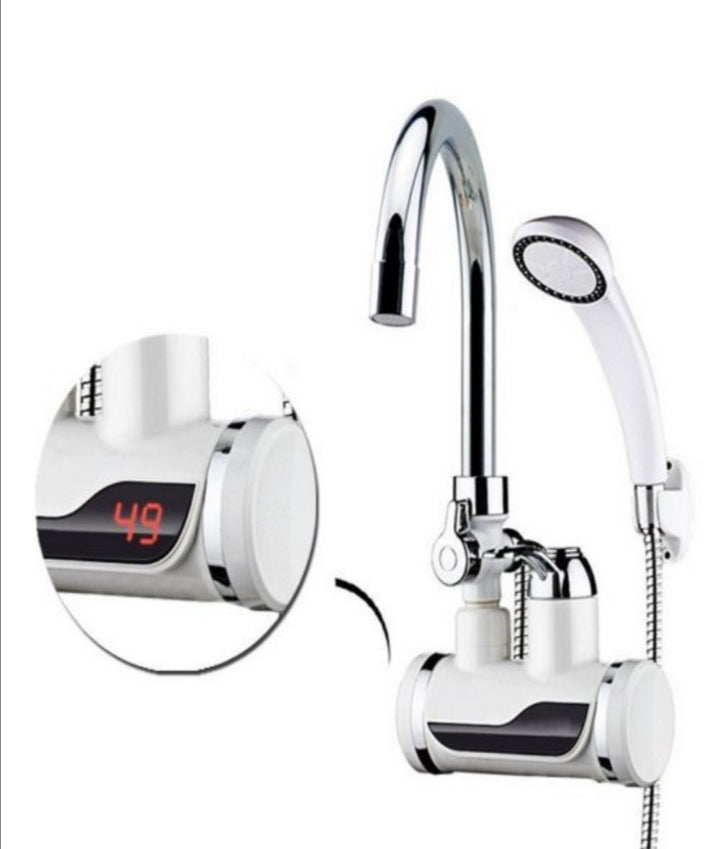
There are two main types of under-sink tankless heaters. Pressurized models connect directly to the water line and can supply multiple faucets. Non-pressurized models have a small reservoir and operate under low pressure, so they require a special faucet that comes with the unit. If you hook a non-pressurized model up to a regular faucet, you risk damaging the unit due to excessive pressure.
So, before you buy, figure out which type suits your setup. For a kitchen, a non-pressurized unit is often simpler since it doesn’t require any special plumbing. But you have to use the original faucet from the kit. Pressurized models cost more but offer greater flexibility.
Cost-Effectiveness: When a Tankless Heater Actually Saves You Money
It’s often said that tankless heaters are more economical because they don’t keep water hot all day. That’s only true if you use water infrequently—say, once a day for washing dishes. In that case, there’s no standby heat loss from a tank, so consumption is lower.
But if you need hot water frequently, a small tank heater might be more cost-effective. It maintains the water temperature and uses about 0.5 to 1 kWh per day just to keep it warm. A 5.5 kW tankless heater, when running, draws a lot of power, so for longer washing sessions, it could end up costing more. Think about your habits: if you need water in bursts, tankless is great. If you use it constantly, a tank model is the safer bet.
How to Choose the Right Model for Your Sink
First, measure the water pressure at your faucet. Pressurized tankless heaters have a minimum activation pressure of around 0.25 to 1.5 bar and a maximum working pressure of 6 to 10 bar, depending on the model—but check the manual for exact specs. If your pressure is low, go for a model with a lower flow rate or consider a tank heater.
Second, check the distance from the heater to the faucet. If the pipe run is long, it’ll take a few seconds for hot water to arrive. That’s not a problem, but just know you won’t get instant hot water.
Finally, browse our range at the Smart Home Shop. You can compare models, review the specs, and pick one that matches your setup. If you’re unsure, ask one of our experts in-store for advice.
Browse Our Range
Frequently Asked Questions
How much does an under-sink tankless water heater cost?
Prices vary depending on wattage and brand. Generally, smaller 3.5 kW models are more affordable, while more powerful and pressurized units fall into a higher price bracket. Check the product pages on the Smart Home Shop for current prices.
Can a tankless heater replace a large water heater for showering?
Yes, but only if you have a three-phase connection and a unit rated at 9 kW or higher. With a standard 230 V outlet, a tankless heater won’t be enough for showering in winter.
What happens if the water pressure is too high or too low?
Excessively high pressure can damage a non-pressurized heater, so always use the special faucet. Low pressure reduces flow, and the heater might not even turn on. Check your home’s water pressure before buying.
Is a tankless heater safe for older wiring?
Not if the wiring is outdated or the cable is undersized. We recommend having an electrician inspect your system before installation, especially for models over 3.5 kW.
How do you maintain a tankless water heater?
Maintenance is minimal, but you should periodically clean the inlet filter and check for scale buildup. In areas with hard water, limescale can reduce efficiency, so using a filter is a good idea.