Key Takeaways:
- Shoe cabinet depth is measured from the wall to the edge, while hallway width is the clearance that remains.
- For shallow recesses up to 20 cm, wall-mounted models with fold-down shelves are your best bet.
- Fabric shoe cabinets are lightweight and budget-friendly, but they’re deeper than wall-mounted ones and need more space.
- A shoe cabinet with a bench solves both storage and seating, but only if there’s enough room to open the drawers.
- Before you buy, measure both the depth and width of the space, plus the number of pairs you need to store.
A small hallway is often the biggest challenge in an apartment. Every inch counts, and shoes have a way of piling up. A shoe cabinet for the hallway can solve the problem, but only if you pick the right one. In this post, we’ll walk you through how to choose between fold-down, fabric, and bench-style cabinets based on the depth of your space and how many pairs you own.
What to Measure Before You Buy: Space Depth and Hallway Width
Another common issue is that shoppers only measure the hallway width instead of also checking the depth of the area where the cabinet will go. The walkway width matters for moving around, but the depth of the recess or alcove determines which model can actually fit. Depth is measured from the wall to the outer edge of any furniture already in place, or from the wall to the line where you’re okay with taking up floor space.
For example, if you have a recess by the front door that’s 25 cm deep, only a slim model will fit. If the space is deeper, you’ll have more options. So before you buy, make sure to measure the depth, width, and height of the area. These numbers will tell you more than any ad ever will.
Fold-Down Models for Shallow Recesses and Doors
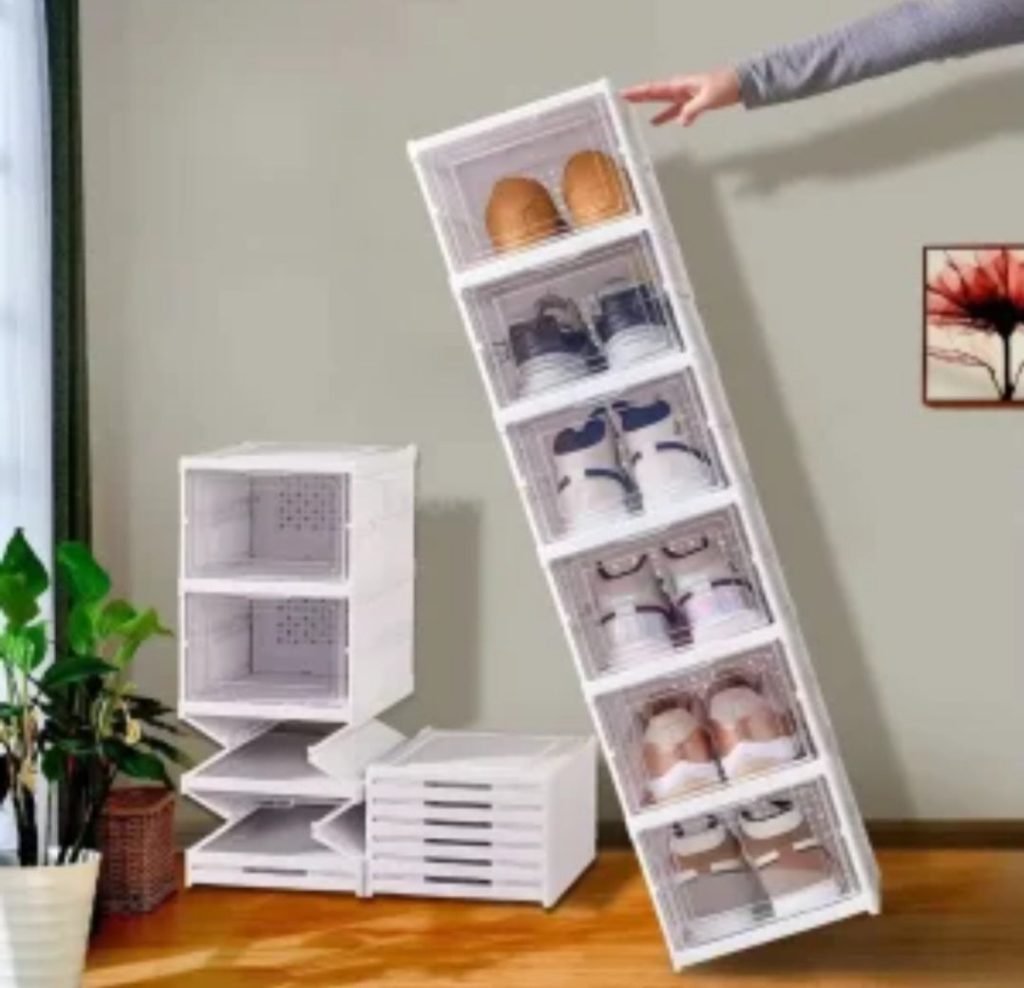
Fold-down shoe cabinets are designed for spaces where depth is limited. There are two main types: wall-mounted units with fold-down shelves and over-the-door organizers. Wall-mounted units attach to the wall and have shelves that lower or flip out. The drawers tilt forward when opened, and when closed, they take up a consistent depth of about 17-25 cm, so they work in recesses as shallow as 18-20 cm for the slimmest models—just double-check the specs of the specific unit.
Over-the-door organizers use the inside of the door and don’t take up any floor space. They’re usually made of fabric or plastic and can hold a few pairs. These are handy in apartments where every bit of floor space counts. Before you buy, make sure the door can handle the weight and that it still opens easily when fully loaded.
Fabric Shoe Cabinets: Lightweight, but Deeper Than They Look
Fabric shoe cabinets are popular because they’re inexpensive and easy to set up. They consist of a metal or plastic frame with fabric shelves. They’re deeper than wall-mounted models, typically around 30 cm, because they need to fit a whole pair of shoes. That means they need more hallway space, but they’re still shallower than traditional chests.
These are great for temporary setups or for households that rotate shoes by season. They’re easy to fold up and move, so you can also use them in a closet or attic. However, fabric shelves aren’t as sturdy as wood or metal, so heavier shoes can cause them to sag. If you have a lot of boots or heavy footwear, you might want to consider a more solid option.
Shoe Cabinet with Bench: When You Have Room for More Than Just Shoes
A shoe cabinet with a bench is the largest and most functional choice. Besides storing shoes, it offers extra drawers for odds and ends, and some models even have a seat on top. This is handy for putting on shoes, especially for kids or older adults. These units are typically 30-40 cm deep. Before you buy, check that there’s enough clearance in front for the drawers to fully extend (at least the drawer depth plus room to walk).
Before committing to a bench-style cabinet, make sure your hallway has enough space for the drawers and doors to open. Also, think about how many pairs you want to store. These cabinets usually hold 6 to 10 pairs, but that depends on the model and shelf layout. On the Smart Home Shop site, you can compare different bench cabinets and see the exact dimensions.
How to Choose the Right Size Based on Pair Count
The number of pairs you need to store is just as important as the depth. A good rule of thumb is to list all the footwear you use during the season. For one person, 5 to 7 pairs is usually enough, and that number goes up for families with kids. If you have more than 10 pairs, you might need a combination of a shoe cabinet and a wall organizer or an over-the-door one.
Once you know your pair count, compare it to the model’s capacity. The shelf width determines how many pairs fit in a row, and the depth sets the maximum shoe length—so measure your longest pair and check it against the shelf dimensions. Boots need more room. If you’re unsure, measure your longest pair and verify it fits on the shelf. Product pages always list the exact dimensions and capacity.
Materials and Maintenance: What to Expect from Each Type
The material of your shoe cabinet affects both durability and looks. Fabric models are lightweight and easy to clean, but they’re less resistant to moisture and wear. Wooden chests are sturdy and elegant but need care and protection from water. Metal units are durable, but they can rust in damp spaces.
Regular cleaning extends the life of any shoe cabinet. Wipe down dust with a damp cloth and let it dry. For wood surfaces, use a polish. If you notice loose hinges or slides, tighten them right away. That way, you’ll avoid bigger repairs down the road.
Browse Our Range
Frequently Asked Questions
What’s the minimum depth for a shoe cabinet?
Wall-mounted models with fold-down shelves can fit in spaces as shallow as 18-20 cm for the slimmest options. Fabric cabinets and bench styles need more, usually 30 cm and up.
How do I know how many pairs a shoe cabinet can hold?
Check the product specs on the page. Capacity depends on the number of shelves and their height, so it’s not one-size-fits-all.
Is a fabric shoe cabinet good for a damp hallway?
Fabric isn’t moisture-resistant, so it can deteriorate. For damp areas, go with metal frames that have an anti-corrosion coating or plastic. Wood can work if it’s well-sealed, but it’s a riskier choice.
Can I use a shoe cabinet for high heels?
Fold-down models usually don’t have adjustable shelves and won’t fit high heels or boots. If you need space for that kind of footwear, look for models with more room between shelves or go with a bench cabinet.
What’s better for a small hallway: fold-down or fabric?
If the space is shallow, a wall-mounted fold-down model is the better pick. If you have at least 30 cm of depth, a fabric one can work, but it’s less sturdy.